


Sharing Resources
In my last post I mentioned that I had gotten carried away at Sun Electronics’ Miami warehouse and had filled my trailer and truck to the point that I decided to leave some batteries behind. I shredded one tire at one A.M. and only had one spare, so maybe that was good that I didn’t try to overdo it. Will I have enough battery power to get by until my next trip to Miami? Probably, yes. You see, I have figured out how to incorporate some other battery sources that I already own. Many of you may be able to do the same.
Before I explain, I’d like to introduce you to the Anderson plug. If you have ever noticed how a forklift battery plugs into the lift truck or the charger, well that’s an Anderson plug. It is a flat, two pin plug that is polarized. One plugs into another, they are both the same and you can’t plug them in backwards, which is a neat trick. They come in at least 3 different sizes. There is a small one like on my niece’s ride-on electric car, a big one used on forklifts (350 amps) and a medium one (175 amps). Moreover, they come in colors, but not to make them pretty.At my house, I have gray, yellow and blue in the 175 amp size. Each color has a slight change to the shape, so you can only plug into the same color.
The first I ever used was gray, and I have one on the front of my truck. I replaced the two tow hooks on the front with receiver hitches, so I could slide a winch on and off, as needed., and plug in to the Anderson plug. I also have a 3kw inverter I can mount there for power in the boonies. Gray became my 12v standard.My solar-powered expedition boat has yellow connectors and I can plug it into the 24v system that powers my house at this time, adding an extra 350 a.h. of battery, without buying more batteries. For some reason, I haven’t had the boat out all year, yet it’s batteries stay active and contribute at no additional cost.The new 48v system has blue Anderson plugs.
There is no way I can screw up and connect the 3 different system voltage levels to each other. I have two 48v golf car/utility vehicles that can plug in to the blue line and add 350 a.h. to the 48v system. I got to considering it, and since the boat has two banks of 24v, I can use a special 3 connector cable to change them to another 175 a.h. at 48v. No screwups will be possible when reconfiguring, connecting or disconnecting and I get bunches of additional storage from batteries I already own.
A similar adapter cable could be used to connect a golf car to the 24v system without making smoke and sparks.The utility golf cars, little trucks actually, allow me to move my solar power around. I no longer even own a functioning gas generator. I cut my firewood with an electric chainsaw, trim trees with an electric pole saw, trim my hedge without a long extension cord and operate power tools for construction and repairs around my farm. The inverter plugs into the blue Anderson plug. There is also a homebrew stick welder to plug into the blue plug. Why limit your solar power to the house?
Photos that somehow disappeared: Blue Anderson plug and 3kw inverter on the solar jalopy. Solar-charged Yamaha G19 powers the chainsaw to cut wood and then hauls it to the house. They both add to the storage of the solar power system. Use your imagination until I can find the right photos and get them back here. It will be less confusing than looking at a boat labelled golf car and a bunch of flamingos labelled Anderson plug!
But back to the main topics, Anderson plugs, once successfully set up, allow you to do all kinds of configuration changes without worry about connecting something wrong. Using them to add underutilized resources to your system can help you get more out of your system without buying more.In my 48v system, with what I have, it tallies up to 460a.h. of main system battery plus 525a.h. of battery that otherwise wasn’t doing anything at night. That’s 47 kwh, good for several cloudy days.Don’t overlook what you already have!By: Neal Collier
It Ain’t Rocket Surgery
How hard is solar power? Some folks are a little intimidated because they don’t know anything about it. John has asked me to put together a booklet for do-it-yourselfers and I think that is a good idea. It just requires a little more focus than writing down whatever pops into my head. Today, though, I am going to write down whatever pops into my head AND give you an idea of how simple solar can be.
Years ago I built a playhouse for my young ward Alexia. She has about outgrown the thing, but still likes to go out there for solitude (away from her sister) or crafting. In the summer, it can get hot, so I found a small 12v panel and a small fan, the kind you can put on the dash of your pickup truck to stir up a breeze. No batteries and no controllers. She saw that if you hook the red wires together and the black wires together it blows air out the front and if you reverse the wires it blows air out the back. The only hitch is that the sun has to be on the panel and not blocked by the trees. There are lots of trees. We’ll probably get around to a more elaborate system with some old batteries when we enlarge the playhouse, so the fan will run better and she can have lights on these afternoons that get dark early.
I have a backup water pump that uses a similar setup. A couple of hundred watts of PV panels are mounted to a simple rack of 2x4s and 4×4 posts and a cable runs down to the spring where the pump is located. There is no battery. If the sun is shining the pump runs. Lots of farmers use similar rigs to water their cattle.
It sounds simple because it is.
Well, a while back I was working on a project out in the hot sun, making another modification to one of the golf car/farm trucks, and Alexia decided she was going to help. She ran to the playhouse and got the 12v fan and got a block of 4 small panels that were leaning against a tree. She used a screw gun to mount the fan on a post near my work and twisted the wires to connect solar panels to the fan. Voila! Instant relief from the heat. And a 10 year old did it, remembering what she had learned a year or two before!
Solar just isn’t that hard with a little guidance. I’ll try to help with that by getting started on that brochure.
By: Neal Collier
Solar and Taxes
The state has a pretty dismal record on solar promotion and subsidies. I didn’t even know there was a program until I read about it in a California magazine! The first couple of years, it appeared that most of the program’s budget was spent on office furniture and administration, leaving only a few slots for participants. Then the rules were a bit too burdensome to make it worth the bother, in my opinion. Maybe this has changed, in later times, but I went my own way.
The good news, though, is that there are some pretty good tax provisions to help out a Florida homeowner with solar power!
First, there is no sales tax on your solar hardware. To enjoy this benefit, though, you need to deal with a solar dealer, like Sun Electronics, because other outlets may not know about or comply with the provision. Case in point, you need a set of batteries. If you go to your local Walmart or Sam’s Club, it sure is convenient to buy their heavy duty EGC2 batteries. BUT, you can argue until you are blue in the face and they will charge you a core charge, disposal fee and sales tax, in addition to a higher unit cost. You’ll end up spending at least 50 bucks more for each battery. At that rate, you can order the Sun 230 batteries from Sun Electronics and have them trucked to your town and still save money. The batteries are rated a little higher than the EGC2, as well.
Second, if you spend 10 grand to add a nice solar system to your house, the property appraiser, by law, cannot add 10 grand to your taxable property value. Sweet.
For those of you in the other 49 states and various territories, you can check with your state’s official website for tax breaks and solar promotion programs. You may find it easier to find the info by doing an internet search for websites that have listings of such things for all states.
Don’t forget to save your receipts and go for the Federal tax rebates, too! The forms are pretty simple.
By: Neal Collier
30% More
Once you get your first taste of solar power, you want more. You can always find ways to use it. Want 30% more?
Back in the 70s and 80s, when solar modules cost a lot more in dollars and dollars were worth a lot more, equipment choices were far more limited and people were always trying to get more power from their solar panels. Makes sense.
Naturally, if you point your solar panel dead-on at the sun you get the most power, so folks came up with schemes to make the panels point right at the sun automatically! Sounds like a good idea, right? It is pretty easy to do with sensors and motors, but that uses some of the power the panel makes. My former business partner built one for one of his modules, just for fun, and it works fine. A really clever fellow came up with one that has a jug of freon on either side of a panel rack. If the sun peeks around to the west side, the west bottle warms up and the east bottle cools down. The pressure difference can drive a cylinder and the panels are caused to lean a little more to the west, and so on for the rest of the day. Next morning it all leans over to the west. It may sound complicated, but is super simple. The upshot is that by tracking the sun you can get about 30% more power from the panels you already own.
Is it a good idea, though? Well, 30% more power is, sure, but overall? First of all, all the panels and the rack are on a single pole, so it has to be a heckuva pole with lots of concrete to hold it in place. In places, like any coastal zone exposed to hurricanes, it may not be rated highly enough to stand up to the wind. One strike. I priced one tracker and it was over $6000, on sale. Two strikes.
Let’s say you have a fixed-mount 3kw PV array. 30% more is about a kw or about 3 more panels. That costs just over $300 at Sun Electronics. Strike three for the tracker! Maybe you don’t have room for 3 more panels, but want that 30% more power. There’s something for that, too. It is called a Maximum Power Point Tracking (MPPT) charge controller. It costs a bit more than an ordinary charge controller, but it allows the panels to operate at their best output voltage. (I notice that the kits Sun Electronics puts together have MPPT controllers, the good ones.) Here’s how it works. We’ve had rain for the last four days, so my batteries on the 24v system are a little depleted. Let’s say they are at 24 volts and a panel is attached and putting out 8 amps. That current, the amps, is pretty much constant. At 24 volts, those 8 amps will give me 192 watts. With an MPPT controller, though, the panel can operate at its best power voltage (you’ll find that on a label on the back of the panel) of, say, 34 volts. 8 amps at 34 volts yields 272 watts or 41% more at peak time! There are some variables and losses to consider, but you can still figure on around 30% more when all is said and done.
And you didn’t spend thousands of dollars!
Here’s one more way to save with an MPPT controller. If you have a 12 volt system, for cabin or boat, for example, you can use 24 volt modules. How does that help? Look at Sun’s price lists and you will see that 24 volt panels cost about half as much, per watt, as 12volt panels! Maybe even a third as much. Yes, you can use 24 volt panels, even in series, to charge a 12 volt battery bank and save money!
I like the FlexMax series of controllers. They are built like a tank, have all sorts of metering data for display and don’t blow up if you connect too many panels. The FM60 and FM80 are solid gear for a serious system.
Take some of the money you saved by not buying the tracker and buy an MPPT charge controller, some more panels and batteries from Sun Electronics. You’ll revel in your awesome newfound power and still have enough money left over for a nice vacation or to catch up on those pesky bills.
By: Neal Collier
Pelicans
Just a letter to John that somehow got posted here!
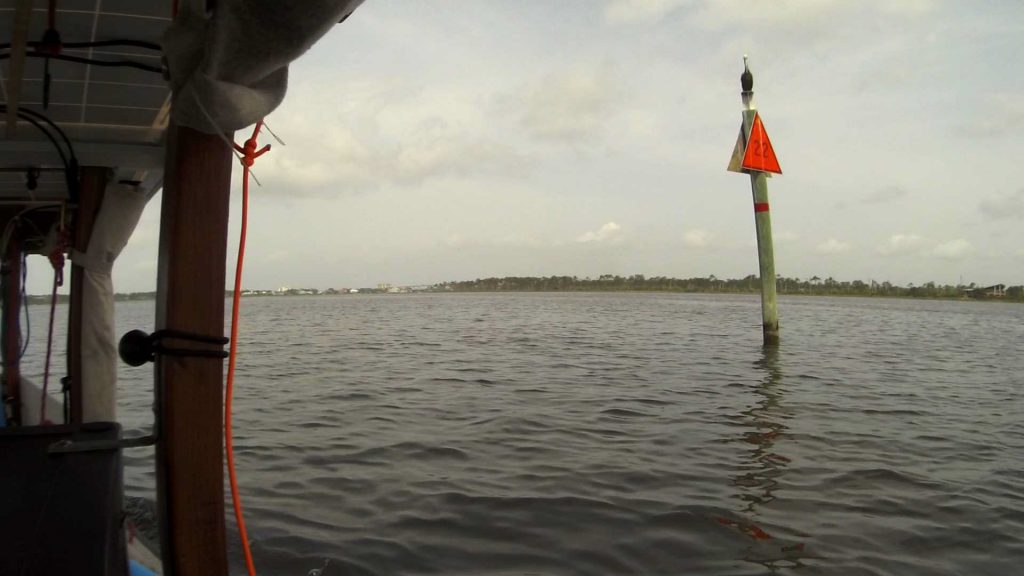
I’m glad to hear you are back in the water. Sounds great. Somehow I didn’t get to the water all year. Now it is too cold to stay out on the boat overnight.I like pelicans, too, from a distance. It is funny how they almost always travel in squadrons. 8 or 10 of them will sit on a floating log or do a fly-by. Sometimes you see solos sitting on a navigation marker or an old piling and sometimes you’ll see a busted up dock with dozens of them. Out in the Gulf of Mexico there are some large channel marker structures that look like pelican storage units or maybe condos. UWF has a dive barge over a 1559 Spanish shipwreck. First duty after a hiatus is to fire up the dredge pump to wash the thick, foul layer of pelican crap off the deck. OMG that stinks!

In Mobile Bay, I saw a little tern land on a pelican’s back to try to steal food scraps. The pelican was having none of that and snapped at the little guy! If you are in a solar-powered boat, though, you yell at pelicans and wave a life jacket. Pelicans look at a solar boat and think, “aircraft carrier.” No way you want pelicans doing to all those solar panels what they do to the dive barge!
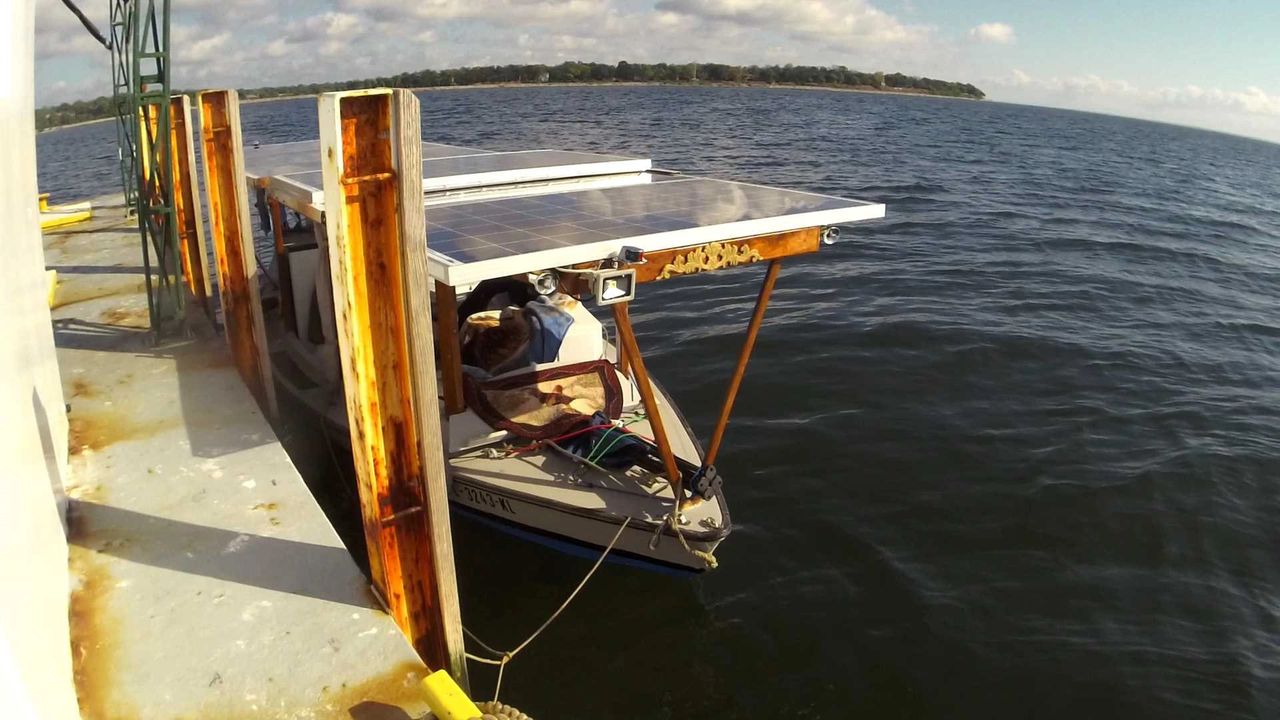
The range of pelicans amazed me. I thought they were coastal birds. Not so, they go where there are water and fish. I saw them on the Mississippi River in Illinois, of all places! I don’t remember them in Pensacola, as a kid, but now they are everywhere, as are gaudily decorated pelican statues, in downtown. Somehow the pelican has become the town bird. Enjoy the art show. By:Neal Collier
Solar Heat
When my grandfather came to this country over 100 years ago, he worked his way around the US and Canada learning English and looking for just the right spot to establish a farm. About 1920, or so, he found the right spot on the shore of Lake Okeechobee, in Palm Beach County, Florida. It was heaven for a Danish farmer, with a climate that allowed year-round crops. Solar power was already a big deal in South Florida back then, even before John started Sun Electronics!You think I’m making this up? I’m not, but I’m not talking about solar electricity, either. I am talking about solar water heating and it was a big deal in Florida. In the late 1800s, a guy in Baltimore, MD, invented the self-contained Climax Water Heater. It first caught on around Baltimore, as you might expect, but was a hit in Florida. Why? My best guess is that South Florida has plenty of sunshine and, in those days, was very cut off from the rest of the country, causing fuel to be expensive. Until Mr. Flagler’s railroad, a ship was the best way of getting to the budding paradise.A Climax Solar Water Heater cost around $25, back when that was some real money.

Solar water heating kind of fell by the wayside at some point as gas and electricity became common, but guess what I saw in the Sun Electronics warehouse when I visited a few weeks ago? Solar water heaters! They are a lot more sophisticated and efficient than the early ones, using heat pipes and evacuated glass tube technology. They look kind of like this.
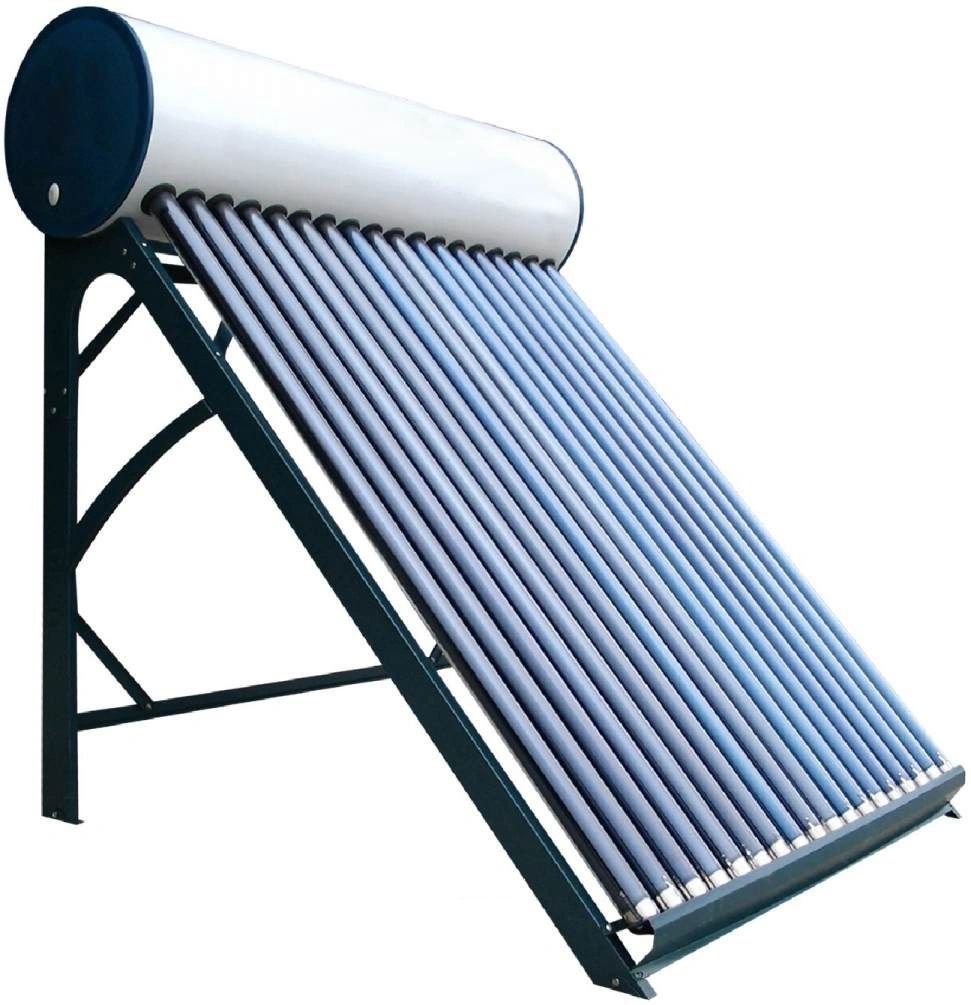
The tank is stainless steel with a thick foam insulation layer. Those blue tubes are magic! Not really, but they work like magic, pulling in the heat. Sure, you could use one of these babies on your suburban home to save on the power bill, but imagine the luxury of hot showers at your remote cabin or house in the boonies or on your own personal island. A remote abode would have you in pretty much the same situation as old Coral Gables when you couldn’t just call the propane truck to stop by and top up the big gas tank to fuel a water heater. I also saw solar ovens in the warehouse. Most of us would probably think of these as a novelty and only use them for camping, but I am thinking they’d be handy in case of an emergency, like for those folks camping out at Mexico Beach, where their houses used to be. There are places around the world where peoples’ health is ruined by the smoke of cooking fires. I bet they’d love one of these. The real surprise on the water heater, though, is the price. Sun’s prices are about half what some other places charge, just like with their solar panels. I wanted to figure how that compares to the prices a century ago when they paid in silver dollars. Looks to me to be about the same, now, as buying 25 Silver Eagle coins, even though the modern heaters are more efficient and durable! Solar thermal power has been put to use for a long time. Even Mom’s old black cat sits in the window of the sun porch and uses it. Why not us? By: Neal Collier
Efficiency
Going through my morning email newsletters, I came across a press release from a company called LONGi, announcing a new record of solar module output efficiency of 20.41 percent! The exclamation mark was theirs, because another tenth of a percent doesn’t get me all that excited. Last week some outfit announced their record output of over 40 percent. A close read of that announcement showed that their output was achieved with concentrating lenses. Concentrating lenses in turn require that extra effort must be made in getting stuff pointed straight at the sun or everything goes to pot in a hurry.
Any solar module will output more electricity if you put more light on it. The problem is that in addition to the extra complications and power, you get extra heat. Some years ago somebody was selling used panels from a concentrating solar farm and they looked like trays of fresh-baked cookies, all warm and brown.
Sure, somebody with special limitations on weight or available space may benefit from superduper efficient panels, but you can count on special panels having a special price. For my solar boat, the standard “B” modules I used were cheap, but heavy. I compensated by just making the roof a little lower instead of spending way more for lighter modules and the boat has so far stayed right side up. Always have the bottom of the boat heavier than the top!
If you have the space, though, the real efficiency in a solar power system is how many watts you can get for your dollars. More solar sellers seem to be using that criteria in their advertising nowadays, showing a price in $/W. This is seems to be a trend that John started with Sun Electronics, as I have always seen his panels priced that way.
Many of the panels in my array are, shall we say, not “Grade A” and I am happy if they put out anything close to the label rating, regardless of theoretical efficiency. I’m building power levels by shear quantity of modules, counting my efficiency in pennies per watt. As for improving efficiency, blowing the fallen oak leaves off the array helps and it would probably be a good idea to break out the long-handled scrub mop every now and then… it helps!
So, if your idea of efficiency is getting the most for your money, give the Sun Electronics crew a call. They almost always have deals that are even better than the published prices.
By: Neal Collier
Backup Power System, Part 3
I have been rambling about backup power and it is time to touch on the batteries and other topics. My advice on backup batteries is a little different than for solar systems. I advise that you get something that requires little or no maintenance. The reason for that is that you will probably lose interest in a system that just sits there doing nothing when the power company is doing there job, because the lights are usually on! Out of sight, out of mind. If you have flooded batteries (as I did) tucked away in an obscure place (as mine were) then it is quite likely that you will get lax about monthly waterings (as I did). If you don’t water flooded batteries, they lose power and start to emit acid fumes. Acid fumes eat up your terminals and battery racks and cause circumstances that are a lot more unpleasant than simply adding water.
SO, the best advice I can give is to use some sealed batteries, like AGM or some of those new-fangled lithiums. John has both kinds. You’ll find that AGM costs twice as much as golf car batteries and lithium…OMG. Well, that’s upfront costs. It may well wash in the long run. If the charging system is set up right, the AGMs can last twice as long. Lithiums last a lot longer and you can draw them down further without hurting them. That means a little lithium will keep the lights on as long as a bigger lead-acid model of same amp-hour rating.
There are all kinds of batteries out there, but these are the big players, the likely suspects. Just make sure you DON’T overcharge the AGMs and DO have a good battery management system (BMS) on the lithium. BMS is often built into the batteries and sometime come as a bolt-on.
Now, on another subject, did you get the Sun Electronics Christmas Eve email blast? You guys really need to read those things, even if John doesn’t make it easy. It was just a list of part number, quantity available and price. No real description. I got around to reading it Christmas day and decided to use the Miracle of Google to decipher some of these things. HOLY COW! I found that the listing “Outback PS1-3000” was a package that would allow you battery backup, grid-tie or the bones of a complete solar system. Charge controller, grid tie/hybrid inverter, breakers, surge protection, battery box, network control and more in one nice package you can bolt to the wall. They sold before I got to them because the price was $500 for a $5000 package!!! READ YOUR EMAILS!!! Somebody did and got all 3 of them.
Now, on the PS1-3000 package, this has been discontinued because there are some new rules about rapid shutdown. Outback came out with a new system that is similar, but has the rapid shutdown built in. Roberto, or one of the other salesmen, can give you the model number and price if you are interested in a package deal from a good maker.
That’s all for today. Next time is a time of soul searching and self-evaluation when I try to answer the question, “Can I install a solar power system myself?”
By: Neal Collier
Backup Power System, Part 2
Continuing on the subject of a backup power supply for your house, I want to discuss the inverters a little more. There are things to look for and things to watch out for!
I have owned lots of inverters, ranging from 150 watts to 12,000 watts. Some were high end and some were junk. I have even built my own inverters like the 5548 that is on my 48v system and a 3648 for the electric jalopy. In inverter parlance, the “55” in 5548 means 5500 watts and “48” means 48 volts. Given my Scottish ancestry, I am always looking for a bargain, but I have enough experience with this stuff that I can tell you that the ones with the higher price tags may be the better bargains.
One thing you will see in inverter specs is the type of waveform the unit outputs. The power from the power company is a sine or sinusoidal waveform. If you don’t know what that means you can look up a photo on the internet. It is very smooth. All of your equipment likes it. Early inverters used a square wave. Light bulbs and some appliances were ok with that, but motors, chargers and other things were not happy at all about that. These are pretty much gone. They were followed by the “modified sine wave” inverter, which actually makes a modified square wave, giving the peaks needed for most equipment. I have heard all kinds of warnings against running your microwave or other things on them. I have run just about everything on them and never had any trouble, but your ceiling fans will buzz! These are rapidly being superseded by sine wave inverters as the electronics technology has advanced. Motors run cooler on these and these are your best bet in the bigger inverters.
Another term you will see is low frequency or high frequency. The power coming out in a USA model is 60Hz (pronounce Hz as Hertz) or cycles-per-second, as we old timers say, and that’s with the high OR low frequency model. The low frequency unit creates the 60Hz directly through a great big transformer. Doing so gives a little bit of an advantage for surge power when starting motors like a saw, air compressor or A/C. The high frequency models use little transformers that are very efficient at high frequencies to step up the voltage and then switches it back and forth at 60 Hz to form the output. Most of these have the modified sine output, but there are pure sine models on the market, too.
Which do you want? It is really like having a pickup truck with a conventional V8 next to one of the new ones with a turbo 4 cylinder. One lugs along slow and steady and the other buzzes along at higher rpm, but both will haul the load. If you want to carry it around, you’ll probably want the high frequency model. If you are going to bolt it down for the long haul get the low frequency unit. Your bigger models are likely to be low frequency.
Some inverters, like the ones I built, just invert. They just step up the power from your battery to 120 or 120/240 volts. That may be all you need. Consider, though, the advantage of an inverter charger. If an outage runs long, or if you are using in a solar installation, you may need to top up the battery with a generator. The inverter charger can help there. MAKE SURE that the charger will let you set the charge rate. This is very important. If you have, say, a 5548 inverter that can charge at 80 amps and only at 80 amps and you have a 2kw generator, then you have a problem because 80×48 = a whole lot more than 2000 watts. The better inverter chargers will let you set a percentage charge rate so you won’t injure your generator or the batteries. I would love to add that feature to my homebrew inverter, but that would require thinking. These days, thinking is reserved for remembering where I left my phone and keys.
An automatic transfer switch (ATS) is another grand feature to have and it is in most of the bigger inverters. What this does for you is it lets utility or generator power go through to the house and switches to inverter/battery sourcing if the primary source fails. Most of these have some selectable variations. For example, Tom runs his house on the inverter anytime the batteries have enough power and these are charged by a 10kw solar array. He does not have a big battery stack, so if the A/C runs a lot on a summer night, the inverter may switch to the power company at a preset state of charge. Alternatively, the inverter could start a generator if a hurricane took out the utility power and the batteries got low.
Some inverters also have a “sell” mode. This lets you tie a solar system into the grid to sell power to the power company and/or use the grid to store your power for later. This requires some paperwork and an agreement with the power company, especially where these new smart meters are installed. Tom’s power company won’t allow grid-tie and buy his power, so that is why he uses both, and the inverter figures out which source to use at any given time. You don’t need sell mode for a backup system and you may not need some of these other features, but they may come in handy if you get the urge to add solar, later!
Now, let’s go over some things of concern in buying an inverter. First is rated power. A lot of inverters you see on Ebay don’t even come close to spec. I saw one rated at 3000 watts, about the size of your hand and priced at $33. Folks, you will not find a 3000 watt inverter for $33 and you can’t make one that small. I blew up the photo and saw that the label said “300 watts,” which is more likely. I corrected the seller. Instead of correcting the rating, he photoshopped the label! Somewhere in the fine print there was a mention that it was 50Hz. You don’t want that if you are in the USA. Some of these cheap rigs are 240 volts, too, and I don’t mean split phase 240/120. You don’t want 240, I bet. Heaven help you if you order an inverter from Thailand or Malaysia!
Look for continuous rated power. A lot advertise at a peak rating, so that 10,000 watt inverter might be good for 2500. A unit that John sells rates it in levels. This is a good sign. You may see that it says
4800 watts forever, 5500 watts for 20 minutes and 15,000 watts for 3 seconds. These aren’t exact numbers, but this is pretty typical for a good unit. Look at the weight, too. Real watts require real pounds of iron and copper in the transformer. My big inverter (rest in pieces) weighed 185 pounds! One well known Ebay Chinese inverter uses great electronics, but they have gradually used smaller and smaller transformers. My 8kw Chinaverter has one transformer…they used to have two and they weren’t big enough, then. The result is that it can put out 1600 watts continuously and the transformer smells bad if you try to use more for a long time…but it doesn’t weigh very much! On the other hand, my ancient Trace 2524 will put out 2500 watts all day, but bring a friend if you want to move it…it has a big transformer.
Can you parallel the inverter? That means run two of them lashed together for twice the output. Tom bought a 5500 watt inverter from Sun for his entire all-electric house and he had to compromise with the loads. He could not run stove, A/C and clothes dryer at the same time, for example. He added another in parallel and can run anything he wants, now. If anything happens to one of them he can fall back to the other until repairs can be made. It is a nice feature in case you want to expand, later.
One other concern that you might not have considered is service. My 12kw unit came from an American company. I bought it used and did not do much research. Tom had used it for a number of years and it worked great. After the lightning strike, I went to order schematics and parts. It quickly became clear that the guys at the American company did not have schematics or know anything about it. They just screened their name on a decent Chinese inverter and marked it up. The price of replacement circuit boards indicated to me they were robbing parts out of a new inverter. Looking under the hood, I discovered the circuit boards were designed by the same guy who designed my wimpy Chinaverter!
I used to design circuit boards, so I can spot a designer’s trademark. So, the moral of the story is, search around on the internet to see if anybody does service or sells parts and manuals. I checked one of John’s nice rigs and the signs were good. They may have some more info on that subject at Sun, so it would not hurt to ask.
A final consideration is a seller who will back his gear. Consider anything you buy directly from China as disposable. Trust me. Again, I don’t work for Sun Electronics…I am a customer and this is a true story: something I bought from John two years ago went bad. I contacted John to see how the warranty worked with that product. He said he didn’t know, but HE would replace or refund it. He put me in touch with Louis and after sending in some photos showing the problem, Louis said he would give me a credit. No hassle. Done. Where else are you going to find that?
Next time I’ll continue onto the subject of batteries and other considerations. In the meantime, if you just can’t wait to get started, you should at least have some ideas on what you want and need. Call John or any of the sales engineers at Sun Electronics and they can get you started.
By: Neal Collier
Backup Power
Coming out of last weekend, the network news guy told us how many HUNDREDS of THOUSANDS of homes were without power in the wake of a big snowstorm, which included a lot of area where people were not accustomed to dealing with such. It looks like a little more of the same this weekend. Here on the coast, we have to deal with hurricanes knocking out power every few years, on average, but we aren’t big on ice. In the north, you hear about it several times a year with the snow and ice and I wonder, “WHY DON’T MORE PEOPLE HAVE BACKUP POWER SYSTEMS???”
Sure, some people do have generators, but that is not always the best way to go, even the automatic whole-house generators. Don’t get me wrong, those are nice and Mom loves hers, but there are better options.
I have seen these headlines and repeatedly started to write this article, only to get frustrated about which way to go with it. There are so many options and maybe that makes the decision process more complicated. On this try, I will go with just a general outline and talk about some of the equipment. Hopefully, that will help you select the right system for your house.
First, do you want something that will take over normal operation of the entire house? Or would you be happy with something that will keep some lights on and maybe power the fridge and microwave so that you can have some comfort food and a hot cup of cocoa as the cold wind howls outside?
Let’s start with generator vs. battery. I visited a popular generator maker’s website and, by golly, they can solve all of your problems, they say. They tell you that a highly-touted lithium battery system will only last 2 hours and only put out a paltry 2kw, while they can power the whole house for days. Oh, marketing guys! This is the same generator Mom has. Twice it has failed to start because the service tech left the switch set wrong. Once it failed to start because the battery had exploded (which corroded a hole in the bottom of the cabinet). Every time it starts it burns a lot of expensive (in her town) natural gas and makes a lot of racket, regardless of load. Still Mom loves it, but I get aggravated when I have to drive 32 miles in bad weather or storm debris to get it running… 92 year old ladies don’t want to be troubled with mechanical issues, but they are good at sending their sons on a guilt trip. She bought her generator after a 2 week power outage and it usually works pretty well.
The marketing guys at the big battery company have a different story. They say their wall-mounted thing will make life grand for two weeks. Maybe so, if your idea of a grand life is operating a table lamp for a couple of weeks. Their battery system costs more than the generator, more even than a couple of homes I’ve owned.
Is there a compromise? Sure. First, you need to consider what a typical outage would be. Yeah, there are exceptions to “typical”, like the time mine was out for 5 weeks and the MONTHS that the folks in the Florida panhandle are looking at, but usually the number is just a day or two. My number was 4, because I live at the far end of a rural line.
Then, consider what you want to keep running. The fridge, microwave, Mr. Coffee, and some lights are probably on your list. In the north, maybe you need to run the blower and igniter circuits on an oil furnace. YOU CAN RUN THE WHOLE HOUSE, but it will cost more. Even a portable box you keep in the garage to provide a few lights can be a great comfort! Once you have decided HOW MUCH POWER you need by figure how much the devices use and how many hours you will use them, you can start looking at the components and number of batteries you need.
Let’s talk about inverters. These are gadgets that turn the DC voltage of a battery into the AC voltage that your fridge eats. They are commonly found with an input voltage of 12, 24 or 48volts. 12 volts is usually used on lower power systems and have the advantage that you can charge the batteries with your car, that 4000 pound generator in your driveway. 48v inverters are used on high power systems because the battery current is lower and you don’t have to use huge cables. 24 volt units are a good compromise and a good choice for a system for basic comforts.
The basic inverters just do one thing, they invert. Nothing automatic is going to happen. You connect it to the battery bank, turn it on and run a cord to whatever you want powered. You could plug it into a generator plug, if you have one installed in your house. From the basics, you then have all kinds of deluxe units. For an automatic system, you have inverter/chargers with automatic transfer switch (ATS). These would typically be installed between a main breaker and a sub-panel that feeds power to whatever you consider your critical or nice-to-have loads. The big ones can run the whole house. With these, on a normal day, the utility power passes straight through to the house and a little more goes to keep the batteries happy. When a squirrel leaps to his death on a power line transformer, your neighbors’ houses go dark and you notice a slight flicker in the lights as the inverter takes over. Maybe the ceiling fan has a slight buzz, but that’s it. Sweet.
And you know? Once that is in place and paid for, it is a simple matter to bolt a few solar panels to the roof to charge the batteries and power the loads. An outage that runs beyond the “typical” one won’t run the batteries down! That’s right, the backup system is the first step to a full-on solar power system. That is where my system is now as I gradually work toward total independence from the power company.
Since this is starting to run long, I’ll stop here and let this soak in, then move on to other considerations in a day or so. If you are not technically inclined, don’t worry. This is just to introduce you to some of the basics. After you know enough to ask the right questions and decide what it is you feel you want and need, you can call Sun Electronics. John’s crew has guys who can translate your needs into a package that will fit your budget. They design tailored systems all the time and it doesn’t cost extra.
By: Neal Collier